
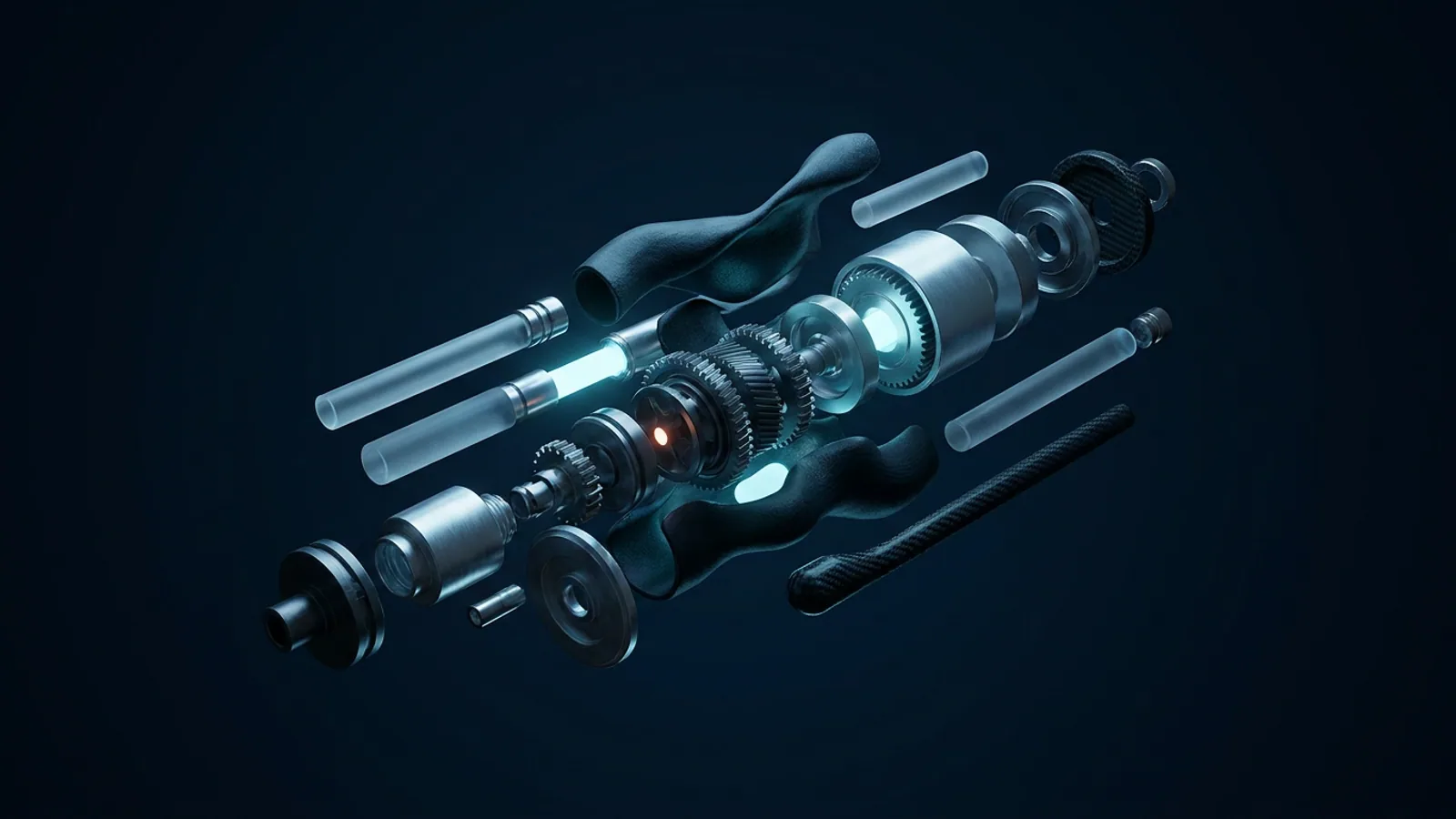
An engine is a system, not a collection of independent parts. Air, fuel, compression, ignition, exhaust flow, cooling and lubrication must work together. Understanding these relationships makes it easier to understand both engine tuning and the limits of a vehicle.
Air enters the engine
The intake supplies filtered air. On a turbocharged engine, the compressor increases its density so that more oxygen can enter the cylinders. The intercooler then reduces the temperature of the compressed air before combustion.
Restrictions, leaks or incorrect sensor readings in this path affect the entire process. A calibration cannot compensate correctly for air that the engine is not actually receiving.
Fuel is measured and delivered
The low- and high-pressure fuel systems deliver the amount required by the ECU. Injectors must meter and atomise the fuel within a precise time window. Petrol and diesel engines use different architectures, but both depend on stable pressure and healthy injectors.
When a target requires more fuel, the pump, injectors and available injection time must still have sufficient capacity.
Combustion creates torque
Inside each cylinder, the piston compresses the charge. A petrol engine uses a spark plug to start combustion; a diesel engine relies on pressure and temperature. The resulting cylinder pressure pushes the piston and turns the crankshaft.
Combustion must happen at the right moment and remain controlled. Excessive temperature, knock, poor mixture preparation or unstable pressure can quickly turn a performance request into a mechanical problem.
The turbocharger and exhaust side
A turbocharger uses exhaust-gas energy to drive the intake compressor. Its operation depends on airflow, exhaust pressure, shaft speed, temperature and control of the wastegate or variable geometry.
More boost is never an isolated instruction. It must remain consistent with fuelling, combustion, charge temperature and the turbocharger’s operating range.
Cooling and lubrication protect the assembly
Oil separates moving surfaces, removes heat and supplies components such as the turbocharger. Coolant carries heat away from the engine. Low oil quality, incorrect level, contamination or a cooling fault can undermine an otherwise coherent project.
The transmission also receives the torque
The clutch, gearbox, driveshafts and differentials transfer engine torque to the road. Their limits matter just as much as the engine’s. On some vehicles, the engine ECU and transmission control unit exchange torque requests and limits continuously.
At Swaptune, we therefore look at the complete selected configuration rather than treating peak power as the only objective.
FAQ
Which component creates power?
No single component does. Power results from airflow, fuel, combustion, engine speed and the ability of the whole system to operate efficiently.
Does a larger intercooler automatically add power?
Not by itself. It may help control intake temperature and consistency, but the effect depends on the complete setup and calibration.
Why can a clutch slip after tuning?
Because additional torque may exceed the remaining capacity of a worn or marginal clutch. Its condition must be considered before increasing torque.
Can software compensate for a hardware limitation?
Software can manage available hardware, but it cannot create physical capacity that is not there.